Chairs, Cake and Quorum: What a Year of Hiring Out Our Back Room Has Taught Us
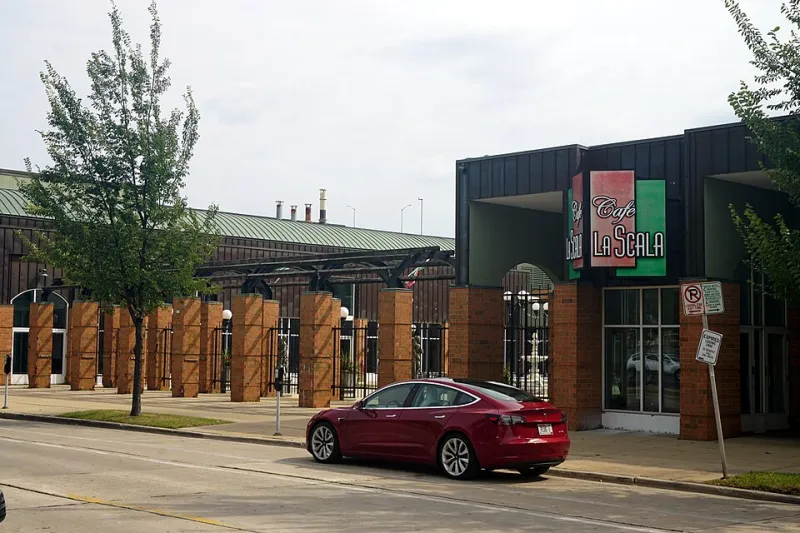
Photo: Michael Barera, CC BY-SA 4.0, via Wikimedia Commons
At some point last winter, our back room stopped being the place where we stacked spare chairs and became the busiest part of the building. Not because we launched a slick events programme, but because a book club needed somewhere to argue about a novel without shouting over the espresso machine. Then came the new-parent meetup, the parish committee, a birthday tea for a neighbour who turned eighty, and a group of lapsed quiz champions who needed a table big enough for six answer sheets. None of them wanted a private dining room. They wanted a useful room with a door.
That distinction matters. A back room is never just a back room. It is a spare bit of the neighbourhood, and once people know it exists, they will tell you exactly what they need it for.
The Groups That Found Us
We did not set out to become a community venue. We set out to sell coffee, lunch and the occasional glass of something cold. But the back room had two things going for it: it was separate enough to be private and close enough to the bar to be looked after. That combination turned out to be catnip for anyone organising something small and slightly awkward.
Book clubs are the obvious ones. They arrive with a shared copy of a paperback, a few strong opinions and a habit of ordering more cake than they planned. New-parent groups are less predictable. They need space for buggies, a table that can be wiped in one sweep, and absolutely no judgement about the volume of a crying baby. Committee meetings are quieter but fussier. They want a projector that works, a kettle that boils quickly and chairs arranged in a way that suggests consensus rather than confrontation.
Then there are the birthday teas. These are the ones that sneak up on you. A family books the room for two hours, arrives with a cake, a grandmother and a balloon, and leaves the place feeling strangely warm. We have learned to keep a spare knife, a box of candles and a roll of bin bags behind the bar for exactly this reason.
The Minimum Spend Is Not a Greedy Gate
The first question most groups ask is about the minimum spend. We understand why. It can sound like a toll booth. But a room is not free to run. There is heating, lighting, staff time, washing up, and the small matter of a business that has to pay its own bills. A minimum spend is simply a way of making the maths work without charging a flat hire fee that would frighten off the very groups we want to host.
In practice, we set it low enough that a book club can meet it with a round of teas and a few slices of cake. We are not trying to turn a committee meeting into a wedding reception. We are trying to make sure that opening the back room does not cost us more than it brings in. When a group understands that, the conversation changes. They stop seeing the minimum spend as a penalty and start seeing it as a menu.
Noise Is a Menu Item
Noise is the trade-off nobody warns you about. A back room with a door is not a soundproof room. It is a room where sound goes somewhere. We have learned to think about noise the way we think about the menu: some groups are quiet, some are lively, and some need to be seated as far from the coffee grinder as possible.
The new-parent meetups are not noisy in the way people expect. The babies are fine. It is the collective sigh of adults who have not finished a sentence in three days that carries. Book clubs are louder than they admit. Committees are quieter than they should be. Birthday teas are a law unto themselves. We now ask a simple question when a booking comes in: will this group mind if the room next door is busy? It is not a trick. It is just better to know before the chairs are rearranged.
The Furniture Shuffle
There is a particular kind of physical labour to hiring out a back room. Tables go out, chairs come in, the plant gets moved, the plug socket is suddenly in the wrong place. We have a rough floor plan that works for most groups, but every group has its own idea of how a room should feel. One committee wanted a horseshoe. A book club wanted a circle. A birthday tea wanted a long table with a clear run to the cake.
We have learned to build in twenty minutes either side of a booking for the shuffle. That is not a hidden cost. It is part of the service. If we tried to do it in five minutes, we would be grumpy, the group would feel rushed, and someone would end up carrying a chair through a conversation. Better to say yes to the horseshoe and give ourselves time to make it happen.
Timing Is Everything, and Nothing
Timing is the quietest trade-off. A Tuesday evening booking is easy. A Saturday lunchtime booking is a negotiation with the rest of the room. We have to think about whether the back room can be borrowed without making the front room feel like a corridor. We have to think about staff levels, about whether the kitchen can send out a round of sandwiches at exactly the moment a committee breaks for tea, and about whether a birthday tea will still be going when the evening crowd arrives.
Our rule is simple: the back room has to work for the people in it and the people outside it. If those two things are in conflict, we say so. That might mean offering a different time, a different layout or a different menu. It does not mean saying yes to everything. A neighbourhood venue earns loyalty by being useful, not by being endlessly accommodating.
What It Actually Costs to Be Useful
The bigger lesson is that usefulness is not a marketing strategy. It is a daily practice. It means keeping the back room clean, the chairs stackable and the kettle working. It means knowing which group needs the lights dimmed and which one needs the heating turned up. It means being honest about what a room can and cannot do.
We have also learned that the back room pays us back in ways that are hard to put on a spreadsheet. The book club comes back for Sunday brunch. The new parents become regulars on weekday mornings. The committee recommends us to the school fair. The birthday tea leaves a card behind the bar. These are not transactions. They are the slow accumulation of trust.
Lessons for Other Cafe-Bars in 2026
If you are thinking about hiring out a back room in 2026, start small. Decide what the room is for, what it is not for, and what it costs to open the door. Write it down. Put it on the website. Be clear about minimum spends, noise, timing and furniture. Then be flexible where it matters.
Do not chase every booking. A room that is always booked is not necessarily a room that is well used. Sometimes the best thing you can do is leave it empty, so that a regular can have their usual table and the room can breathe. A back room is never just a back room. It is a promise that the neighbourhood has somewhere to go.
And if you are a book club, a committee or a parent who has not finished a sentence in three days, you are welcome. Bring the cake. We will find the chairs.