The Quietest Hour in the Cafe-Bar Is Doing More Than You Think
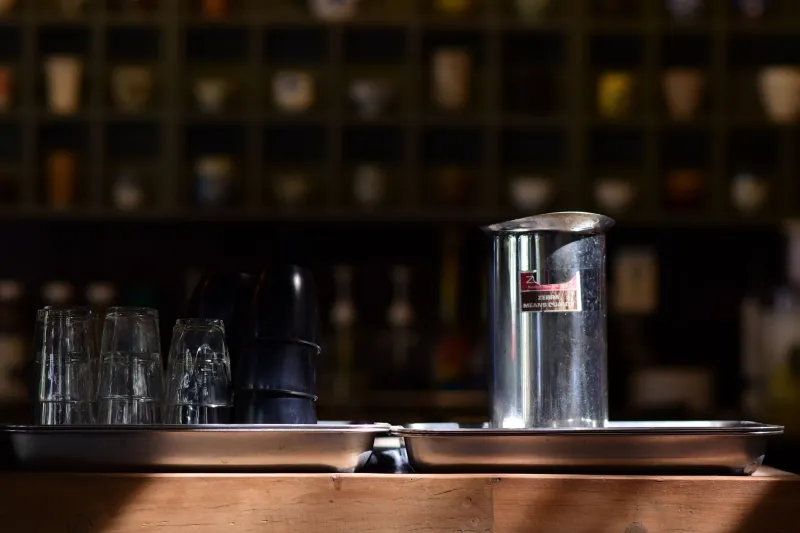
There is a moment in the afternoon when a cafe-bar seems to exhale. The lunch plates have gone back, the coffee machine is no longer in full roar, and the lights seem to settle. It is roughly 3pm to 5pm, and for years it has been treated as dead time. I think that is a mistake.
The quiet hour is not empty. It is simply less noisy about what it is doing. The people in the room at 3pm are not the same people who fill it at 8pm, and they are not all looking for the same thing. That is exactly why the slot deserves a second look.
The lull isn't empty — it's just quieter
A cafe-bar has two obvious peaks: lunch and the evening. Everything between them can feel like a gap in the day, something to be endured until the next rush. But a neighbourhood venue is not only a place for peak times. It is a place for the hours in between, too.
At 3pm, the room can be a desk, a waiting room, a catch-up spot, a first stop before an early dinner, or a small reward at the end of a shift. It can be all of those things without turning into a co-working space or a pub. The trick is not to force one identity on the hour. The trick is to let it hold a few at once.
Who is actually in the room at 3pm
Remote workers are the easy ones to spot: laptop open, one coffee going cold, a second one on the way. They are not necessarily there for the whole afternoon. Many just need a change of scene between calls, or a table that is not their kitchen.
Then there are the school-run parents. Not the ones in a rush at 8:45am, but the ones who have an hour before pickup and no desire to go all the way home. A pot of tea and a slice of something is a small, sane pause in the day.
Shift workers are the group most venues overlook. Someone finishing a hospital shift, a care shift, a bakery shift or a night on the road does not always want breakfast food at 3pm or a full evening meal at 6pm. They want something warm, something small, and a seat that does not feel like a meeting room.
Early diners are another quiet regular. People with young children, people who do not want to eat late, people heading to a film or a train, people who simply prefer the afternoon light. They are not looking for a big night out. They are looking for a table, a pint or a soft drink, and a plate that does not ask too much of them.
There are also the between-appointment people, the retired regulars, the students with a gap in their timetable, and the friends who can only meet before the school pickup. The 3pm hour is a social seam. It joins parts of the day that are usually kept apart.
The menu can shift without a hard reset
A good cafe-bar does not need to ring a bell at 5pm and become a different business. The menu can move gently. Coffee stays. Cake stays. But a small plate can appear next to the pastry. A half pint can sit next to the pot of tea. A low-alcohol option can be just as visible as the espresso.
The important thing is not to make anyone feel they have walked into the wrong room. If someone wants a flat white at 4:30pm, they should get a good one. If someone wants a small glass of something local and a bowl of something warm, that should not feel like a request from another planet. The room can hold both without a formal handover.
This is where the 3pm window is more interesting than the fixed lunch or the full evening. It asks the venue to be flexible rather than segmented. The menu does not need a hard reset. It needs a few bridges: something sweet, something savoury, something soft, something with a little alcohol, something with none.
Two moods, one room
The cafe-bar works best when it does not treat cafe and bar as two separate businesses sharing a lease. At 3pm, the two moods can overlap. The light is still on the cafe side. The drink list can start to lean towards the bar. Nobody has to declare which side they are on.
That is also why the quiet hour can be good for conversation. The music does not have to compete with a full room. The tables are not all booked. The staff have time to read the room and offer something beyond a rushed order. A neighbourhood cafe-bar is not just a menu; it is atmosphere with a till.
At Pear Tree Cafe Bar, the afternoon is not a holding pattern before the evening. It is part of the day the room was built for. The neighbourhood table does not only fill at noon and eight. It has a quieter shift, and that shift has its own regulars.
Why the quiet hour matters
The 3pm window is not about squeezing more revenue out of every minute. It is about being useful to more people. A venue that only serves the lunch crowd and the evening crowd misses the people whose lives run on different timings. Shift workers, parents, remote workers and early diners are not niche groups. They are the neighbourhood.
A cafe-bar that protects the quiet hour also protects a bit of civility. It gives people somewhere to land without a booking, without a big spend, and without feeling out of place. That is a small thing, but it is the sort of small thing a local venue is for.
The next time the room goes quiet at 3pm, do not read it as a problem to be fixed. It is a different part of the day doing its own work. The quietest hour might just be the most honest one.