The Water Bowl by the Door: Nine Quiet Tells of a True Neighbourhood Cafe-Bar
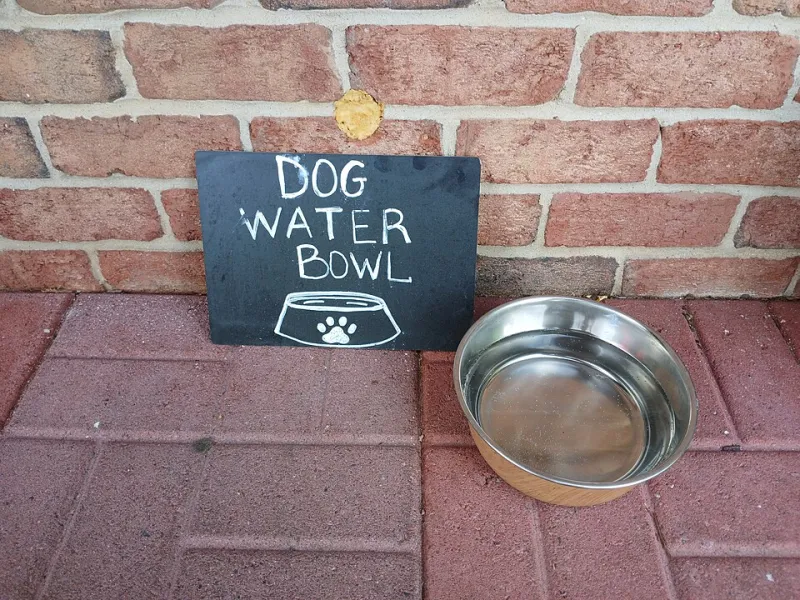
Photo: Ser Amantio di Nicolao, CC BY-SA 4.0, via Wikimedia Commons
There is a difference between a cafe-bar near where you live and a cafe-bar that belongs to where you live. It is rarely obvious from the outside. The signage can be lovely, the coffee can be excellent, the chairs can match. But belonging is built out of repetition and small permissions, not a launch party.
We run Pear Tree Cafe Bar, so we are not neutral on the subject. But the test below is not really about us. It is a house checklist for any neighbourhood venue, assembled from the things we notice when we walk into other people's rooms and think: yes, this one is part of the furniture.
1. There is a water bowl by the door, and nobody has to ask
It does not need to be engraved. It can be a plastic bowl that has seen better days. The tell is that it is full, it is placed where a dog can reach it without causing a traffic jam, and a member of staff tops it up without making a performance of it. A place that thinks about paws is usually thinking about the whole walk to get there: the pram, the cycle helmet, the muddy boots, the person who popped in because the bus was late.
2. Staff know which table you mean before you finish the sentence
You say, 'the one by the...' and they are already nodding. Not because you are a VIP, but because they have built a mental map of the room from repetition. The corner table. The one under the chalkboard. The one with the wobbly leg that everybody loves anyway. It is a small thing, but it saves you the little social dance of pointing at empty air.
3. Someone moves a chair without asking
Regulars rearrange furniture here. Not in a wrecking-ball way, but in the way people do when a room feels shared: two chairs pulled together for a pram, a stool borrowed for a chat, a table nudged so a group of five can fit. Nobody freezes. Nobody asks permission. The room is treated as a living thing rather than a showroom.
4. The noticeboard is messy in the right way
A neighbourhood board is not a branded content calendar. It has a lost cat, a choir flyer, a swimming lesson notice, a badly photocopied poster for a pub quiz, and one mysterious card advertising 'reiki for horses'. Not everything is for you. That is the point. A board that only advertises the venue's own events is a noticeboard; a board that carries the street's small chaos is a neighbourhood.
5. There is one boring thing on the menu that never leaves
Soup. A toastie. A scone. Something reliable that has survived every menu redesign and every passing trend. These dishes are not there because the kitchen lacks ambition. They are there because a local place needs an anchor. You should be able to come in on a wet Tuesday and order the thing you always order without scanning for a new concept.
6. You hear the same three conversations, but not from the same people
The rhythms overlap. The post-school pickup. The dog walk. The laptop worker who has one coffee and three meetings. The couple who read the paper. You do not need a loyalty app to notice these patterns. A neighbourhood place is not necessarily a place where everyone knows everyone. It is a place where the same kinds of life keep passing through.
7. There is a table that is nobody's and everybody's
Usually the big one. It holds newspapers on a Sunday, a group of cyclists on a Saturday, a buggy on a weekday morning. People share it without much ceremony. They might ask, 'Is this free?' but they already know the answer is 'mostly'. A communal table is a quiet piece of social infrastructure. It says the room is not just a collection of private pods.
8. The bill does not arrive until you look up
There is a difference between slow service and unhurried service. Unhurried service reads the room. It refills the water. It notices that you are deep in a conversation and does not interrupt with the card machine. It also notices when you are ready. This is not about leaving people stranded. It is about not treating a table as a timer.
9. Leaving is a small operation
You put your jacket on and someone says, 'See you.' Maybe the person at the next table does too. You have a short chat by the door. You are not funnelled past a gift shop or asked to scan a QR code to rate your visit. The exit is slow in the way that a front hallway is slow. That is usually a good sign.
The test is not a competition
None of these things require a huge budget or a listed building. They require memory, permission and a certain willingness to let the room be a bit untidy. A neighbourhood cafe-bar is co-authored. The staff set the tone, but the regulars write the script.
If your local scores eight out of nine, go back this week. If it scores nine, you are probably already part of the furniture. And if you have a tell of your own — the mug that is kept behind the bar, the table that is always saved for the crossword — we would like to hear it. The checklist is better when it is shared.